HydraDB stores decisions, facts, docs, relationships, knowledge, and how it all evolves, including what changed, when, and why, so your agents can understand and act on the right context, always. At any scale or complexity
The fast and scalable graph database, built on object storage for 10–100× lower costs, with assisted graph creation to save you time building and organizing your graph. Built for intelligent agents that deserve fast, accurate retrieval










The knowledge graph for AI
Recall everything
Assemble context from business data, workplace apps, chats, documents, emails from one system of record for agents
High recall accuracy
We built several applications with HydraDB. Most achieved strong benchmark results for accuracy

For cost efficiency & scale
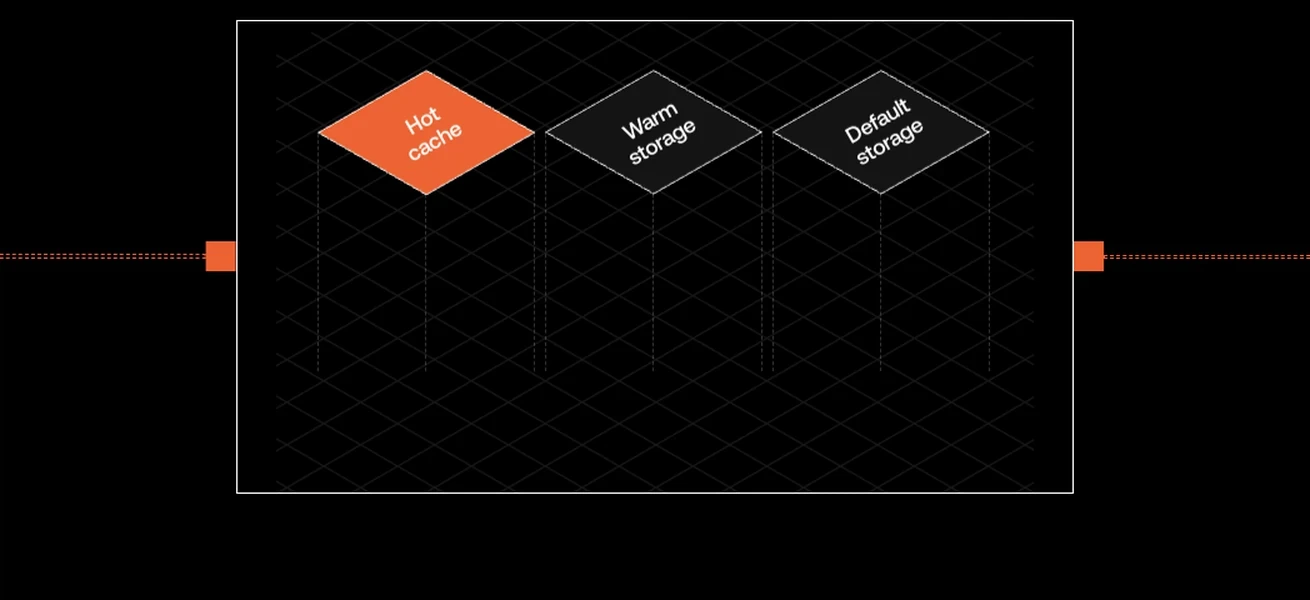
Built for high throughput, with context managed between in-memory, NVMe SSD, and object storage
Built for low latency
So you can build real-time applications
Architecture
Built on object storage, with separate compute for writes, indexing, and reads. A graph core designed for speed, affordability, and scale
Agents are as smart as the context they have
- A customer’s history lives in your CRM, decisions in Slack, and blockers in project tools, leaving your agents without the connections needed to explain what’s happening
- Use HydraDB to connect documents, conversations, and decisions around shared customers, people, and projects so your agents can follow context across tools
- Unlock complete context for vague queries: “What’s blocking this launch?” with the owners, dependencies, and everything in between
HydraDB vs Vectors & Postgres
Vectors find similar passages. Postgres stores rows.
HydraDB follows relationships
Built by the community 13k Stars on GitHub & Counting
Of everything agent-related I’ve seen lately, HydraDB is the only one my first reaction said is solid Knowledge graph + log structure You can tell at a glance it was designed by someone who understands both algorithms and computer systems

Menci
@lcMenci · translated from Chinese
I’ve literally rebuilt the same memory workaround on three different agent projects always ends in a sloppy Postgres table and a context-injection script nobody wants to maintain about time someone made this simple

Zephyr
@Zephyr_hg
got curious about the actual engine, so I went into the HydraDB OSS repo, ran graph-node locally, and dogfooded it with a small Rust API

nikhil
@nick_realm_01
Sometimes you see a new technology so disruptive that it can kill an entire industry HydraDB is not just the replacement for a vector DB but will also completely change how the world thinks of databases

Sudarshan Kamath
@kamath_sutra
I built my own mini @hydra_db Spent the last few weeks rebuilding an AI memory system from scratch, this time based on the HydraDB paper

Karthiknadar1204
@uchiha_katsuki_
Built Lazaret for Hack Hydra A supply-chain incident response system that compiles a package compromise into HydraDB once, then replays the blast radius from graph state, showing exactly what was exposed, when, and through which dependency path

Tim
@winsznx
pulling off sub-200ms recall on a full relational graph is an INSANE engineering flex props to @contextkingceo and @hydra_db - If these latency numbers hold up, this launch is pretty massive

Charly Wargnier
@DataChaz
Really impressed with HydraDB for agent memory Now integrated into cognivern.persidian.com

papajams
@papajimjams
Memory layers are becoming so important these days I recently read the HydraDB paper, and the performance of their product is seriously impressive Watch out!!

Qian Jiang
@qianjiang___